Brief Summary of 2026 Lithium Market
Owen Chen - Senior Sales Manager @ Ganfeng Lithium Group
1、 What is the production plan
The total production expectation is set at over 200,000 tons, of which approximately 100k-120ktons lithium carbonate(Li2CO3), 50k-100k tons lithium hydroxide(LiOH), and the rest will consist of products such as lithium phosphate, lithium dihydrogen phosphate, lithium fluoride, and lithium metal etc.
The production of lithium carbonate is expected to increase by more than 10,000 tons compared to last year, while the production of lithium hydroxide will decrease, with more resources being allocated to lithium phosphate production. Lithium phosphate is relatively less competitive in the market because ONLY we have.
We avoid getting involved in competitive markets for products with low entry barriers, focusing instead on its technological advantages and market differentiation.

2、 Supply and demand situation for lithium hydroxide(LiOH) 2026 year?
There may be a shortage of lithium hydroxide because major producers total production capacity is around 200k tons, while the demand for ternary materials is expected to range from 350k to 400k tons, creating a clear supply deficit. Moreover, the production of lithium hydroxide requires high barriers and complex certification processes, making it difficult for new manufacturers to enter the market quickly, which exacerbates the supply shortage.
For LIOH: Major manufacturer(MF) 1: 50k + MF2:100k+MF3:50k=200k tons,combined with the production of other companies, the total may reach around 300,000 tons.
The demand for lithium hydroxide in the context of ternary materials is estimated to be between 300k-400k tons.
3、 Lithium Carbonate expectation ?
Reach higher and there may be short-term shortages.Overall, supply and demand dynamics as well as the maturity of the futures market will determine prices, and discounting practices will likely disappear, making pricing more transparent.
The S*M and F*K have begun to diverge significantly from real spot market levels, with basis spreads at one point exceeding 10,000–20,000 RMB per tonne (equivalent to approximately $1,400–2,800 USD at current exchange rates) for S*M, and even larger for F*K.
There is growing disappointment with the performance of these two benchmarks. Market small talks shows that major lithium producers are moving away from using these indices for pricing in long-term contracts.

4、 What are the company's advantages in terms of ESG and supply chain management?
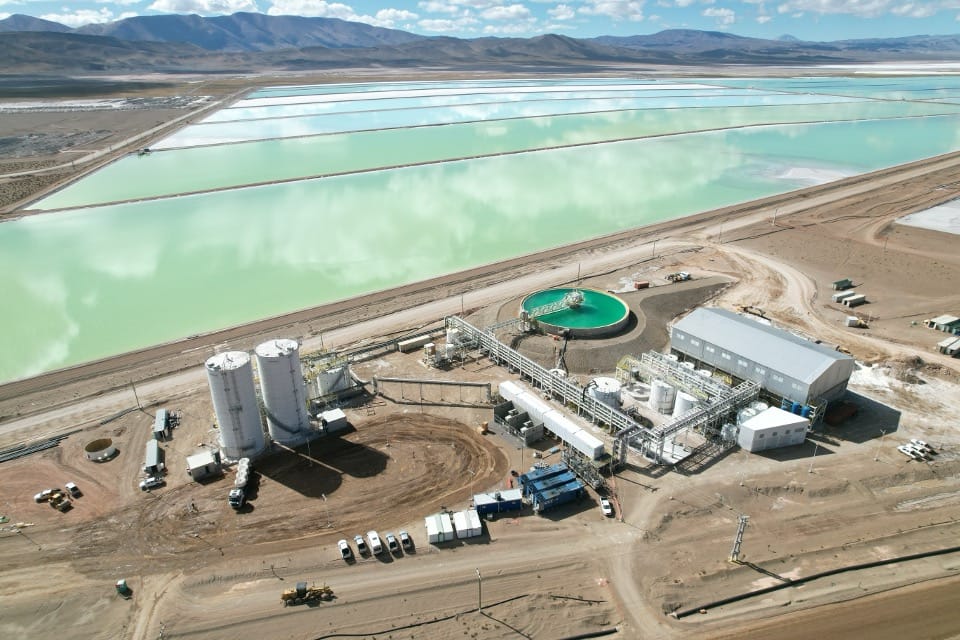
We places emphasis on traceability and compliance in its ESG practices. For example, its mines in Mali meet Australian standards, its projects in Argentina use photovoltaic power generation, and its joint ventures include foreign investors, which enhances international recognition. The company also avoids operating in sensitive regions such as Xinjiang to ensure that its global business is not affected by political factors, thereby enhancing brand trust and competitiveness.
a. MSCI ESG-A
b. RMAP Certification (Responsible Minerals Supply Chain Assurance)
c. The Argentine project operates with 100% renewable energy sources.
d. Selected as a Green Opportunity Case in China's ESG Practices for 2025
e. More..
5、 J-Mine- The Bottleneck Far Exceeds Simple License Renewal
On January 4, the State Council released the Comprehensive Action Plan for Solid Waste Management, explicitly proposing to strengthen source reduction of industrial solid waste. In principle, no further approval will be granted for beneficiation projects without self-owned mines or supporting tailings utilization and disposal facilities.
The new Mineral Resources Law, formally implemented on July 1, 2025, explicitly lists lithium as an independent mineral species. Previously, the J mine in Yichun was registered under the model of "ceramic soil as the primary resource, with lithium as an associated resource," which no longer complies with the new regulations.
Resumption of production around the Spring Festival still faces multiple rigid constraints, with the actual implementation difficulty far exceeding market expectations. From a legal procedural perspective, resumption requires completing five core steps: "supplementary payment of transfer proceeds — mineral species change approval — full environmental impact assessment process — application for safety production license — practical operational preparations." Each step has strict sequential dependencies, and any delay in one link will directly affect the overall progress.
The earliest possible resumption time would also need to be postponed to around June 2026, making it highly unlikely to complete all approvals and resume production around the Spring Festival (late January to early February 2026).
I mentioned this in my previous articles and will organize and update it again soon.

Comments ()